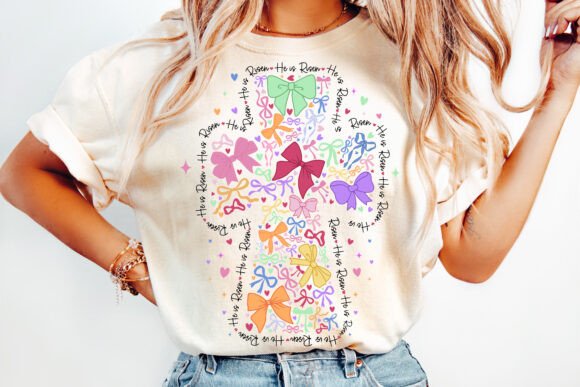
Christian Easter Cross Coquette PNG
A Soft, Thoughtful Easter Statement—Not Just Another Cross Design
When I opened Christian Easter Cross Coquette PNG for the first time, I didn’t see a generic religious motif—I saw something quieter, more intentional. The cross is centered but not rigid; it’s softened with delicate curving flourishes and subtle asymmetry in the arms. There’s no heavy ornamentation or baroque clutter—just gentle line work, balanced negative space, and a slight coquettish tilt that gives it warmth without sacrificing reverence. It feels handmade, not mass-produced. That matters—especially when you’re stitching it onto a baby onesie for a baptism gift or embroidering it on a linen tea towel for a boutique Easter collection.
Where This Design Truly Shines in Real Projects
I recently used Christian Easter Cross Coquette PNG as the focal point for a small-batch run of organic cotton tote bags—intended for a local church’s Easter outreach. The design scaled beautifully at 3.8 inches wide, holding clarity even when stitched in soft ecru thread on oat-colored canvas. It worked just as well on lightweight sweatshirts (with tear-away + cutaway stabilizer), and surprisingly well on structured twill aprons—where the slight curve of the cross echoed the natural drape of the fabric.
For Etsy sellers and craft business owners, this is a versatile T-Shirt Designs asset that reads clearly at medium scale: think chest embroidery on unisex tees, left-chest placement on baby bodysuits, or centered front panels on pillow covers. Its clean silhouette makes it ideal for holiday embroidery where legibility and emotional resonance matter more than flash—think Easter Sunday brunch napkins, nursery wall hangings, or personalized keepsake blankets for new parents.
Fabrics & Surfaces That Ask for Extra Care
This isn’t a “set-and-forget” machine embroidery design. Its charm lives in its subtlety—and that subtlety can vanish on tricky substrates. On thin or stretchy fabrics (like jersey knits or lightweight rayon), I recommend testing stitch density first: too much fill stitch in the cross arms can cause puckering, especially near the curved tips. On dark fabric, avoid light pastel threads unless you’re using a high-contrast underlay—those fine outer lines need breathing room to read.
Caps and curved surfaces demand attention too. The slight tilt of the cross means it won’t auto-align with standard cap hoops—you’ll want to rotate it manually and confirm registration before stitching. And while it’s not an applique design, if you choose to add a satin-stitched border or tiny floral accent (as some designers do), keep those elements minimal. This design earns its impact through restraint—not layering.
What Customers Notice (and Why It Builds Trust)
People don’t buy Easter embroidery for technical perfection—they buy it for meaning, mood, and craftsmanship. When a customer sees Christian Easter Cross Coquette PNG on a finished product, they register three things instantly: reverence, care, and quiet confidence. No shouting iconography. No overworked detail. Just a cross that feels both timeless and tender.
That translates directly to perceived value. A client who receives a hand-embroidered kitchen towel with this design doesn’t just get a functional item—they get a tactile expression of intention. For small shop owners and handmade product sellers, that distinction builds repeat business. It signals you understand your audience’s values—not just their aesthetic preferences.
Practical Designer Notes Before You Stitch
- Always test on scrap fabric first—especially if pairing with textured weaves like burlap or linen blends. The fine curves respond differently to fiber grip than smooth cotton.
- Check thread color contrast early. This design relies on shape, not saturation. A low-contrast combo (e.g., charcoal gray on navy) may lose definition in dense fill areas.
- Review stitch density in the cross arms. If your embroidery software shows >12,000 stitches in a 4-inch version, consider simplifying minor interior details for better wash durability.
- Confirm hoop size compatibility. While the PNG itself is scalable, your digitized file must match your machine’s max hoop dimensions—especially if planning sleeve or pocket placement.
- Inspect small corners and curves in your embroidery software preview. Those graceful bends should flow cleanly—not stutter or double-back.
- Test black-and-white mockups before finalizing listings. Does the shape hold up without color? (It does—this one does.)
- Use appropriate stabilizer: medium-weight cutaway for knits, tear-away for stable wovens, and fusible + tear-away for lightweight linens.
- Verify licensing terms before selling finished items or bundling as part of a digital embroidery file pack. Not all T-Shirt Designs assets permit commercial redistribution.
Final Thought: A Design That Earns Its Place
Christian Easter Cross Coquette PNG isn’t flashy—but it doesn’t need to be. In a market flooded with bold, busy Easter motifs, its quiet strength stands out. It works because it respects the material it’s stitched on, the hands that stitch it, and the people who receive it. Whether you’re prepping for a craft fair, building an Etsy collection, or fulfilling a custom embroidered patch order for a faith-based nonprofit, this design delivers sincerity over spectacle. That’s rare. And that’s why, after stitching it across six different fabric types and three product categories, I keep coming back to it—not as filler, but as finish.